• ICBT&ET is a cyclical conference, organized for 62 years in a four-year cycle as ICBT, and is considered by experts to be one of the most important boiler conferences in the world.
  • Over 400 participants attended previous editions. Beginning in 2026 with the 15th edition, the conference will change its name to ICBT&ET to maintain its well-known brand while expanding its scope to include issues of broadly defined energy transition.
     
  • ICBT&ET brings together a wide range of specialists from numerous companies and countries. Achievements and new solutions in the production and operation of equipment will be presented, combining research results from universities and research centers, as well as industrial experience.
     
  • In previous editions, approximately 100 papers and announcements were presented. All submitted papers will be peer-reviewed. Papers of the highest scientific and technical value will be published in journals with an appropriate impact factor. The conference will be conducted in Polish and English. Simultaneous translation is planned.
 

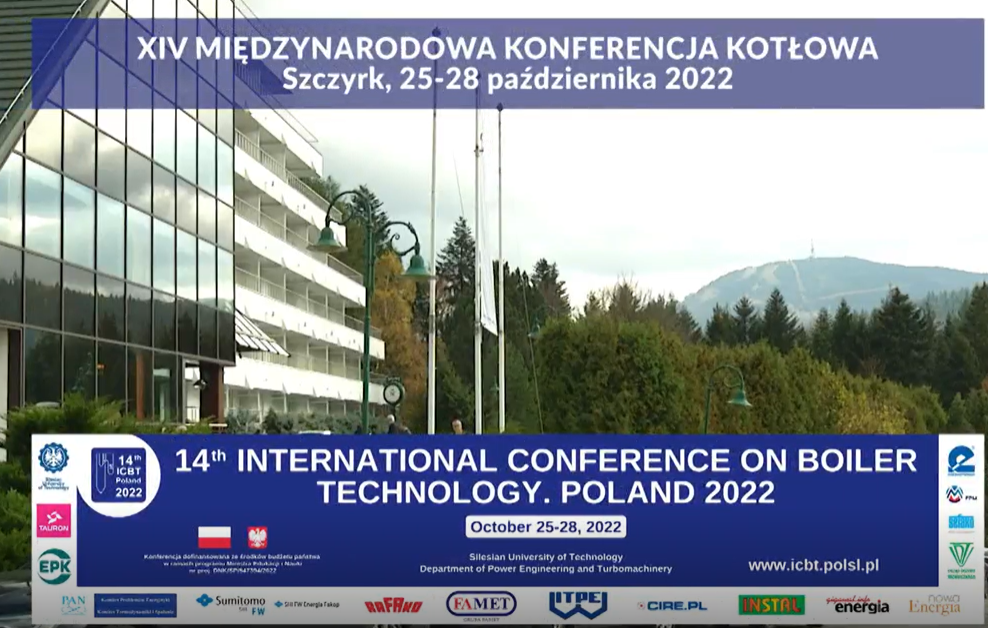
Video from the previous ICBT 2022 Conference

4
dni
50
wystąpień
100
mówców
300
miejsc


Speakers
Scientists and specialists in the field of boilers and broadly defined energy issues worldwide.


Directions of development and conversion of boilers

  • Conversion of coal-fired boilers into gaseous and liquid fuels with low CO2 emissions, e.g., H2, NH3, methanol, biogas, biomethane
  • Conversion of coal-fired boilers for the combustion and co-combustion of biomass and waste, as well as municipal waste and RDF
  • Boilers for large fuels with a grate and furnace Fluidized bed boilers
  • Biomass, biogas, and waste incineration boilers, recovery boilers
  • Boiler operation in a Circular Economy environment
  • Boiler modernization to meet the requirements of directives
  • Coal and biomass mills, mill installations, co-grinding
  • Auxiliary equipment for boilers, environmental protection devices
  • Innovative heat exchangers for the energy sector
  • Thermal disposal of municipal waste
  • New combustion systems, oxygen combustion, CO2 emission reduction
  • Boiler materials

Boilers in the energy transition

  • Boiler operation in transitional states
  • Operation in cooperation with renewable energy sources
  • Combustion by-product management
  • Technologies for preparing renewable and waste fuels
  • Problems related to efficiency, flexibility, and reliability
  • Material diagnostics and component wear assessment
  • Methods for monitoring and improving operation
  • Problems related to erosion, corrosion, slagging, or contamination of heating surfaces
  • Control and regulation systems
  • Legal regulations regarding harmful substance emissions

Energy Transition

  • The role and challenges of fossil fuels (coal, fuel oil, natural gas) in National Power
  • Systems (NPS) with a high share of renewable energy in the period of green
  • transformation
  • Carbon footprint of energy systems and the optimal composition of the energy mix in the
  • NPS
  • Renewable energy sources (biomass, biogas, waste) for generating electricity and heat in
  • the period of transition away from coal technologies
  • Renewable energy sources in heating plants and combined heat and power plants CHP
  • Alternative energy sources (synthetic fuels, nuclear power plants)
  • Boilers for various technologies (power plants, CHP, heating plants, chemical technology,
  • waste incineration, heat recovery)
  • Turbomachinery, heat exchangers, electrical and auxiliary equipment for energy systems
  • Sustainable energy generation e.g. hydrogen and ammonia utilization in power plants
  • Problems of efficiency, flexibility, and reliability;
  • Methods of control and improvement of operation;
  • Energy storage and management
  • Integrated energy systems
  • Materials for energy systems
  • Energy policy, markets, planning
  • Artificial intelligence methods in the transition of NPS to zero-emission operation.